
Make a confession.
How many times have you failed your treatment course just because you forgot to take your pill in time?
You’re not alone in this.
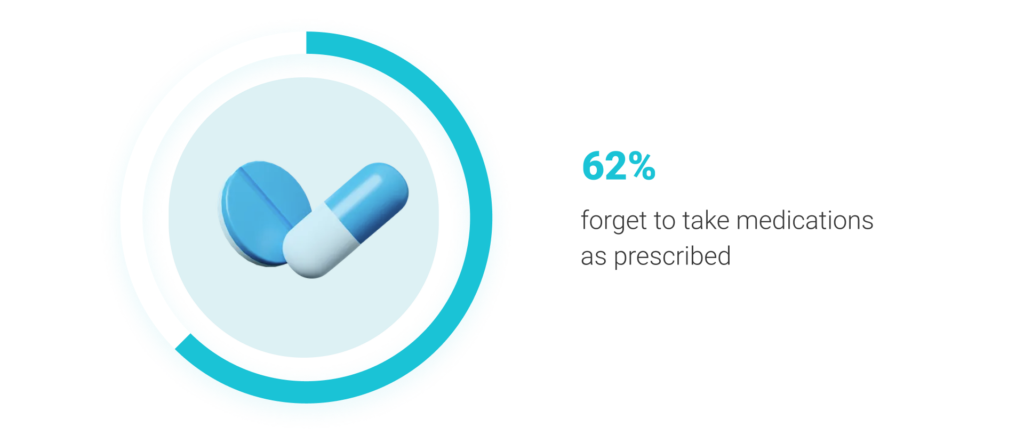
According to the National Library of Medicine report, a cross-sectional survey of unintentional nonadherence in over 24,000 adults with chronic illness showed that 62% forget to take medications as prescribed.
Unfortunately, struggling to keep up with medication schedules and engaging patients in their treatment journey is an ongoing challenge in healthcare. And one of the reasons is a patient’s engagement and motivation – or a lack thereof.
Digital assistants with aid-focused features partially solve this issue, bridging the gap between the healthcare providers’ requirements and patients’ adherence.
In the first part of this article series, we discussed how appointment scheduling saves the day for both sides. This time, we’ll talk about the medication reminder feature and show you how Unidatalab extends the possibilities for our existing virtual assistant.
On the other side of the problem
So, failing to adhere to the medication plan may bring unintended consequences. And not only those apparent for patients like worsening health conditions, hospitalization, and increased health risks.
You may be surprised, but healthcare providers struggle with it, too. Here are only a few negative impacts of this medical problem.
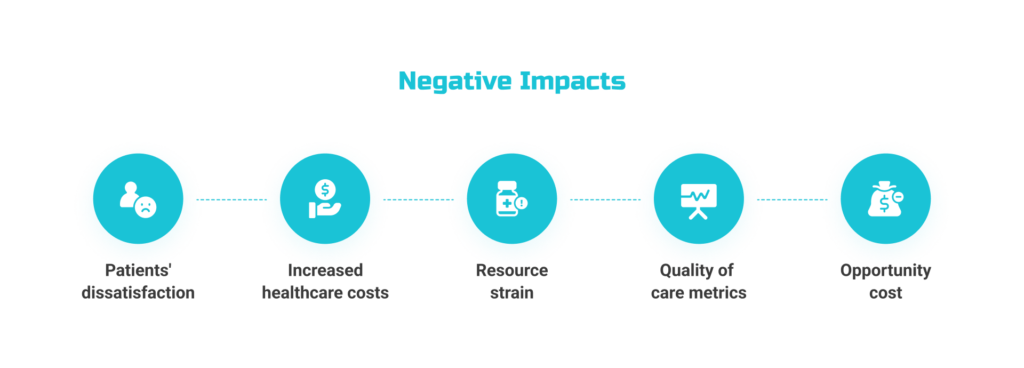
- Patients’ dissatisfaction. When patients don’t adhere to their prescribed medical treatments, they often experience worsened health outcomes. This can lead to patient dissatisfaction with the healthcare provider, impacting the provider’s reputation and potentially resulting in negative reviews or complaints.
- Increased healthcare costs. Non-adherence can significantly drive up healthcare costs. Patients who don’t follow their treatment plans may require more frequent hospitalizations, emergency room visits, or additional interventions, leading to higher expenses for healthcare providers.
- Resource strain. Healthcare providers experience pressure on their resources when dealing with non-adherent patients. These individuals often require more attention, follow-up, and care coordination, distracting resources from other patients and potentially leading to longer waiting times and reduced overall efficiency.
- Quality of care metrics. Non-adherence can negatively impact a healthcare provider’s quality of care metrics. When patients fail to adhere to treatments, it can result in suboptimal health outcomes, lower patient satisfaction scores, and reduced compliance with quality standards, affecting the provider’s ratings and reputation.
- Opportunity cost. This term refers to the potential benefits or revenue that healthcare providers miss out on when patients don’t adhere to their treatment plans. These providers could have used their resources to treat other patients effectively, but non-adherence results in unrealized opportunities to provide care and generate revenue.
And this is only the tip of the iceberg. The consequences might go even deeper.
Building a medical reminder chatbot with Unidatalab
In the second stage of our experiment, we decided to expand the functionality of our healthcare virtual assistant. So, we added the Pill Reminder feature. Now, users can input their prescribed medications, creating reminders for taking them over a specified number of days and at specific times. This feature prevents patients from forgetting to take their prescribed medications, ensuring they stay on track with their medical routine.
Now, we have two main functionalities:
- booking appointments (sets a meeting with a doctor at a specific time and date in the user’s Google Calendar);
- medicine scheduler (adds pills to remind you to take them at a particular time and amount of days).
As a bonus, the bot can show users all added pills and their corresponding information.
How it works
The technology behind this feature extension is the same as in the first part: we took the same RASA API, which will also help us put the reminders.
Basically, it has a pretty similar logic to the previous one:
- The bot waits for a user’s prompt like “I want to add my pills.”
- When a user prompts the phrase, bots ask them (in that particular order):
- the name of the pills;
- how many days to take;
- the time.
- As soon as a user provides all the required details, the bot performs the action (make remainder for pills with corresponding time and days) with RASA API and confirms that the medications have been added.
Here is an example of a conversation between a bot and a user:

As a result, the bot reminds the user to take prescribed medicines at the specified time.
What we got
The second part of our experiment journey for the virtual assistant has been a significant step toward enhancing its utility.
The newly introduced Pill Reminder component allows users to manage their medication effectively by enabling them to set reminders for taking prescribed medicines. Patients can now specify the duration and specific times for medication intake, ensuring they do not miss any doses.
By integrating this functionality into our appointment bot, we have improved its overall benefit and contributed to future users’ health and well-being, which will help them stay on track with their medical requirements.
What’s next?
Of course, such solutions don’t exist by themselves in a vacuum. Usually, they are a significant part of the customer engagement strategy.
However, their first aim is to improve patients’ lives and treatment quality, with a different focus.
So, what types of healthcare platforms can benefit from pill reminders?
Medication management solutions. Such narrow-purpose platforms aim to help patients adhere to their prescribed treatments with integrated medication reminders, improving overall health. A showing example is “Medisafe,” a medication management platform that offers customizable reminders and has been used by millions globally.
Electronic Health Records (EHR) systems. Such all-in-one solutions can include medication reminders to provide healthcare providers with real-time information on patient adherence and improve the quality of care. MyChart from Epic Systems is a widely used EHR platform that can incorporate medication reminders for both taking and refilling.
Clinical research and trials software. These solution providers can use medication reminders to track and enhance adherence among study participants. Medidata Solutions is an example that offers tools for managing clinical trials, including medication.
Senior living and home care applications. Software used in senior care facilities can include medication reminders to help elderly residents manage their medication regimens. PointClickCare is a platform used in aged care that can deploy medication reminders as one of its critical features for Senior Living residents.
And these are only a few, as the scope of digital healthcare assistance is inevitably broadening.
We at Unidatalab love being at the forefront of novelties in healthcare and other industries. Have an idea of the next best thing? Then drop us a line.