
Sounds weird, but using AI across numerous industries no longer surprises us.
It has become such an ordinary case that many of us don’t even pay attention to it.
However, it’s exciting how the technology has evolved over the years – let alone its usage for different purposes.
The evolution of AI in call centers only proves this view, having progressed from basic automation to more advanced capabilities.

- The 1970s-1980s – It all started with Interactive Voice Response (IVR) systems for call routing and basic information.
- Late 1990s-early 2000s – Natural language processing (NLP) advanced, allowing AI systems to understand and interpret spoken and written language, facilitating better customer interactions.
- Mid-2000s – Chatbots and Virtual Assistants brought simulated human conversation for handling customer interactions.
- 2010s – AI made Sentiment Analysis and customer insights possible, leading to personalization and predictive analytics.
- Late 2010s – Integration with CRM systems enabled real-time data access.
- Present – Continuous learning and improvement through machine learning. AI systems analyze customer interactions, identify patterns, and adapt responses based on feedback, enabling call centers to continuously enhance their customer care strategies.
It’s incredibly interesting to observe how the previous technology evolution shapes its future and the trends to watch and implement.
The article you’re about to read will dive deep into AI technology trends in call centers for customer care, explain why it’s essential to keep an eye on them and discuss challenges to overcome.
What’s the Point?
Reports state that 76% of customers get frustrated when businesses fail to deliver a personalized experience. AI is one of the most prevalent technological tools to assist significantly with this issue.
That is only one of the numerous reasons why keeping an eye on trending AI technologies is essential for businesses.
Let’s overview several other ones.
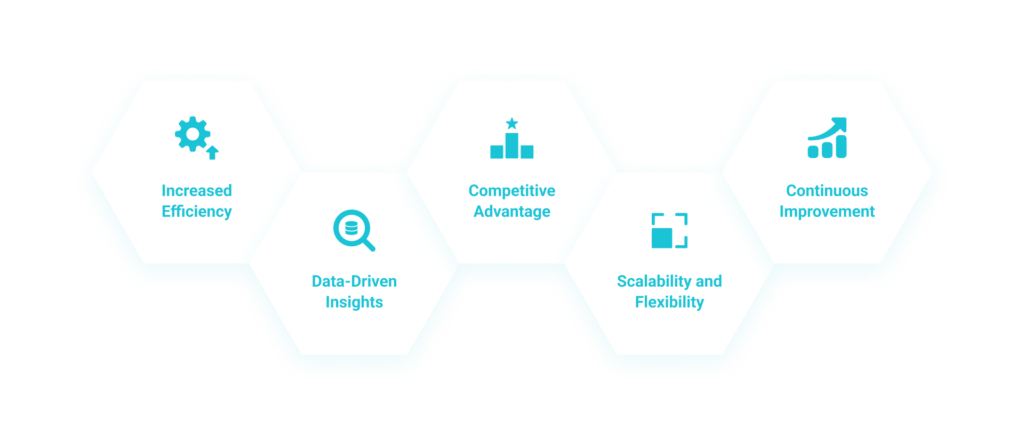
- Increased Efficiency: AI can automate repetitive and mundane tasks, allowing human agents to focus on more complex and high-value customer interactions. This improves the overall efficiency of call center operations, allowing businesses to handle higher call volumes and reduce wait times.
- Data-Driven Insights: AI-powered analytics provide valuable insights into customer behavior, preferences, and pain points. Businesses can make informed decisions to improve their products, services, and customer care strategies by leveraging these insights.
- Competitive Advantage: Keeping up with AI trends empowers businesses to stay competitive. Adopting innovative AI solutions can differentiate a business from its competitors and attract customers who value advanced customer care experiences.
- Scalability and Flexibility: AI technologies enable businesses to handle fluctuations in call volumes and adapt to changing customer needs. AI-empowered systems can be easily scaled up or down based on demand, providing the agility required in dynamic business environments.
- Continuous Improvement: AI-enabled patterns can learn and improve over time. By analyzing customer interactions and feedback, AI systems can adapt their responses, identify areas for improvement, and continuously enhance the customer care experience.
Top 5 AI Trends to bring call centers to a new level
Based on our expertise and experience, we’ve selected top trending technologies and tools to greatly support and improve call centers and their performance in the next few years.
- Prescriptive AI to level up actionable analytics. Unlike descriptive and predictive analytics, which focus on analyzing historical and real-time data to identify patterns and make predictions, prescriptive AI provides actionable recommendations and guidance. In the context of call centers, prescriptive AI can analyze customer interactions, agent performance, and other relevant data to offer specific suggestions on improving customer care processes and outcomes. It can provide insights on optimizing call routing, agent training and coaching, customer engagement strategies, and resource allocation. By leveraging prescriptive AI, call centers can make data-driven decisions and implement targeted improvements, enhancing customer satisfaction, efficiency, and overall performance.
- AI integration for enhanced sentiment analysis. By integrating AI technologies into call center systems, businesses can leverage advanced algorithms and machine learning to gain deeper insights into customer sentiments and emotions. AI integration allows for real-time analysis of customer interactions, enabling call center agents to respond to them appropriately. This integration helps call centers to identify customer satisfaction levels, detect potential issues, and take proactive measures to address concerns promptly. By harnessing the power of AI for sentiment analysis, call centers can deliver more personalized and empathetic customer experiences, leading to increased customer satisfaction and loyalty.
- AI-enhanced voice assistants for deeper voice command understanding. The technology utilizes advanced natural language processing (NLP) and machine learning algorithms to transcribe and analyze spoken commands, enabling more intuitive and efficient interactions. By employing deep learning models, voice assistants can understand context, identify intent, and extract relevant information from customer requests. Additionally, the technology continuously learns and improves over time, adapting to different accents, dialects, and speech patterns to enhance the overall understanding capabilities for a seamless and satisfying customer experience.
- AI-enabled customer journey analytics tools to predict customer behavior. Businesses can deploy and use such AI algorithms and advanced analytics techniques to analyze customer interactions across multiple touchpoints and provide insights into their journey. By capturing and processing data from various channels like calls, chat logs, emails, and social media, these tools enable call centers to gain a holistic view of the customer journey. AI algorithms can identify data patterns, trends, and correlations to predict customer behavior, preferences, and needs. This predictive capability allows call centers to anticipate customer requirements, personalize interactions, and offer proactive support. Thus, companies can optimize customer care strategies, identify areas for improvement, and deliver enhanced experiences throughout the customer lifecycle.
- Conversational AI and Conversational Intelligence combined to define hidden patterns. Conversational AI uses AI-powered chatbots, virtual assistants, and voice assistants to simulate human-like conversations with customers. Conversational Intelligence, on the other hand, focuses on analyzing and extracting meaningful information from these conversations. By combining Conversational AI and Conversational Intelligence, call centers can unlock valuable knowledge from vast customer data. AI algorithms identify hidden patterns, sentiments, and customer behaviors embedded within conversations. This enables call centers to understand customer needs, identify pain points, and predict customer behavior more accurately. Those insights can help call centers to optimize customer care strategies, personalize interactions, and proactively address customer concerns.
What Blocks AI Energy?
At the same time, it’s important to note that AI technologies hide some complexities that might hinder it from broader adoption. Here are just several.
Rapid technological advancement. Innovations are regularly emerging, and AI technology is evolving quickly. Keeping up with these changes requires continuous monitoring and evaluation of new technologies, which can be time-consuming and resource-intensive for call centers. Also, implementing AI in such environments often involves integration into present infrastructure, such as CRM platforms or telephony systems. The complexity of integration can vary based on the specific AI technology and the compatibility with existing systems. Upgrading or modifying old infrastructure to accommodate new AI solutions can be challenging and require careful planning and execution.
Lack of compelling data. AI systems rely on large volumes of high-quality data to train their models and make accurate predictions or provide intelligent responses. However, call centers may struggle to gather and consolidate relevant data from various sources, leading to incomplete or fragmented datasets. Insufficient or poor-quality data can limit the effectiveness of AI algorithms, hindering their ability to understand customer needs, personalize interactions, and provide accurate insights. Overcoming this challenge requires call centers to invest in data collection, management, and integration processes to ensure comprehensive and reliable data availability for AI implementation.
A limited talent pool of skilled AI engineers. Developing and deploying AI systems requires expertise in machine learning, natural language processing, and data analytics. However, highly skilled programmers with the necessary knowledge and experience in these specialized fields are scarce – partially because those are still evolving. This shortage makes it difficult for call centers to find and hire the right talent to build and maintain AI systems, potentially leading to delays in implementation or compromises in the quality of the AI solutions. Addressing this challenge requires investing in training programs, partnerships with educational institutions, and strategies to attract and retain skilled AI programmers to meet the growing demand – or finding a reliable partner.
Costly technology implementation. While AI technology has numerous benefits, the initial investment for infrastructure, software, and training can be substantial. Call centers must allocate resources for procuring and integrating AI systems, ensuring compatibility with existing technology, and providing comprehensive training to agents. More than that, ongoing maintenance, upgrades, and licensing fees add to the overall cost. Small or budget-constrained call centers may find it challenging to justify the expenses associated with AI implementation, making it a barrier to adopting these advanced technologies.
Ethical AI concerns. One major concern is the potential for biases in AI algorithms, leading to unfair treatment or discrimination against certain customer groups. Call centers must ensure AI systems are trained on diverse and representative datasets to mitigate biases. Additionally, privacy and data protection are crucial ethical considerations, as AI systems handle sensitive customer information. Transparency in AI decision-making processes, customer consent, and robust data security measures are essential to address these concerns and build customer trust. Striking the right balance between automation and human involvement is vital to maintaining a personalized and empathetic customer experience, as over-reliance on AI may lead to impersonal interactions. Call centers must navigate these ethical challenges proactively to responsibly and ethically implement AI technologies.
What comes next?
Watching trends is essential. Equally important is to know how to incorporate them properly, which requires careful planning and execution. Here are five steps businesses can follow to ensure their accurate integration.
- Identify Use Cases and Goals: Identify the specific use cases where AI can add value to your call center operations. Determine the goals you want to achieve, such as improving customer satisfaction, reducing costs, or enhancing efficiency. This step will help you focus your efforts and select AI technologies most suitable for your needs.
- Evaluate AI Solutions: Research and evaluate various AI solutions available. Consider factors such as functionality, scalability, ease of integration, and compatibility with your existing systems. Engage with vendors, request demos, and gather feedback from other businesses that have implemented similar solutions. Choose the AI technology that aligns best with your requirements and long-term vision.
- Plan for Data and Infrastructure: Assess your data availability, quality, and security requirements. Ensure you have the infrastructure, storage capabilities, and network bandwidth to support AI implementation. Define data integration processes and establish protocols for data privacy and compliance. Additionally, consider any necessary training or upskilling requirements for your staff to work effectively with AI technologies.
- Pilot and Test: Before fully deploying AI technologies, conduct a pilot phase to test the selected solution. Start with a limited scope, such as a specific customer segment or call type, and gather customer and employee feedback. Monitor the performance, accuracy, and user experience during this testing phase and iterate accordingly. This iterative approach lets you fine-tune the implementation and address any issues or challenges early on.
- Training and Change Management: Provide comprehensive training to your call center agents and employees working with AI technologies. Ensure they understand the AI systems’ capabilities, limitations, and proper usage. Implement change management strategies to help employees embrace the integration of AI, addressing any concerns or resistance that may arise. Foster a culture of continuous learning and improvement to adapt to the evolving nature of AI technologies.
We at UnidataLab are always ready to give you a hand at any of these stages. Have any projects on your mind? Let’s implement it together!